Disclosure: Some links in this article are affiliate links. If you buy through them, we may earn a small commission at no extra cost to you. We only recommend products we've researched or tested; see our editorial standards.
Tesla Tire Wear Guide
Inner-edge wear, camber, rotation intervals, and the checks that prevent a surprise blowout.
GUIDES
Tesla Tire Wear: Inner Edge Checks Before a Blowout
Short version: a Tesla tire can look fine from the outside and still be unsafe on the inner shoulder. Measure the tire, do not eyeball it. Rotation helps when your setup allows it, but hidden inside-edge wear needs alignment attention before it turns into cords, leaks, or a blowout.
The expensive Tesla tire problem is not just that EVs are heavy. It is that wear can hide where owners do not look. Rear inner shoulders, performance tires, air-suspension cars, and cars that skipped rotations can all look acceptable during a casual walkaround while the inside edge is already near the danger zone.
Last updated: May 2026 · Tesla service-manual thresholds checked · Product links checked during article build · Affiliate links disclosed below
The useful habit is simple: measure outer, center, and inner tread depth. If the inside shoulder is much lower than the visible outer edge, the tire is telling you something a walkaround missed.
2. What Tesla officially says about rotation and tread depth
Tesla Model 3 and Model Y service-manual tire-rotation pages state that ride quality and handling are maximized when all four tires are the same age, model, and tread depth.
Rotation interval
6,250 mi
10,000 km, or sooner by tread difference
Tread difference trigger
2/32 in
1.5 mm difference or greater
Replacement warning
4/32 in
3 mm or less in any measured depth
Tesla also says that if only two new tires are installed, the new tires must go on the rear. That matters for owners who discover uneven wear on one axle and are tempted to replace only the most obvious tires.
Verification note: Model 3 and Model Y service pages matched on the key thresholds above. For Model S/X, use the same inspection logic, but confirm your exact wheel/tire setup and service guidance before assuming a Model 3/Y rotation pattern applies.
3. Model-by-model risk map
Model 3 / Model Y
The common owner trap is waiting for the outer shoulder to look bad. Square wheel setups can usually rotate; staggered or directional setups need configuration-specific advice.
Model S / Model X
Heavier cars, air suspension behavior, large wheels, performance tires, and rear geometry make inner-shoulder checks especially important. Treat forum reports as a warning signal, then verify your own car with measurements.
Performance / Plaid / staggered setups
Do not assume a normal front-to-rear rotation is allowed. If tire sizes differ front and rear, rotation options are limited and alignment checks become more important.
Community reports are useful because they reveal where owners get surprised: rear inside edges, Model X/S camber discussions, and tires that looked normal until the car was lifted. They are not proof that every Tesla has the same defect. Use them as a reason to inspect your own car, not as a universal diagnosis.
4. Owner inspection checklist
- 1
Turn the steering wheel to expose the front inner shoulders, then use a flashlight for the rear tires.
- 2
Measure outer, center, and inner tread grooves instead of checking only the most visible outer edge.
- 3
Write down the reading, tire position, date, and mileage. Uneven trend matters more than one isolated number.
- 4
Look for feathering, cords, bubbles, cuts, plugged areas, and a pressure drop that keeps returning.
- 5
If the inner shoulder is disappearing faster than the rest of the tire, schedule alignment and ask for camber/toe readings, not just a rotation.
5. Rotate, align, replace, or ask service?
Rotate
Use rotation when the tire setup allows it and wear difference is starting to appear. Rotation is prevention; it is not a cure for a tire already showing cords or a severe inner-edge pattern.
Align
Ask for alignment when inner shoulder wear is faster than the rest of the tire, after pothole/curb impact, after suspension work, or when the car pulls or vibrates.
Replace
Replace if tread depth is at or below the safe threshold, cords show, there is sidewall damage, or the tire has been driven low enough to damage the casing.
Ask service
If wear is unusual or repeating quickly, bring measurements and photos. Ask for camber and toe readings, not just a verbal "tires are worn" explanation.
Do not install camber arms, lowering parts, or alignment hacks blindly. Diagnose the wear pattern first. The wrong fix can make tire life worse or create handling problems.
6. Tools worth keeping
Affiliate disclosure: Tesla Model Guy may earn a commission if you buy through these links. The recommendation is deliberately boring: tools that make the inspection checklist easier, not random tire accessories.
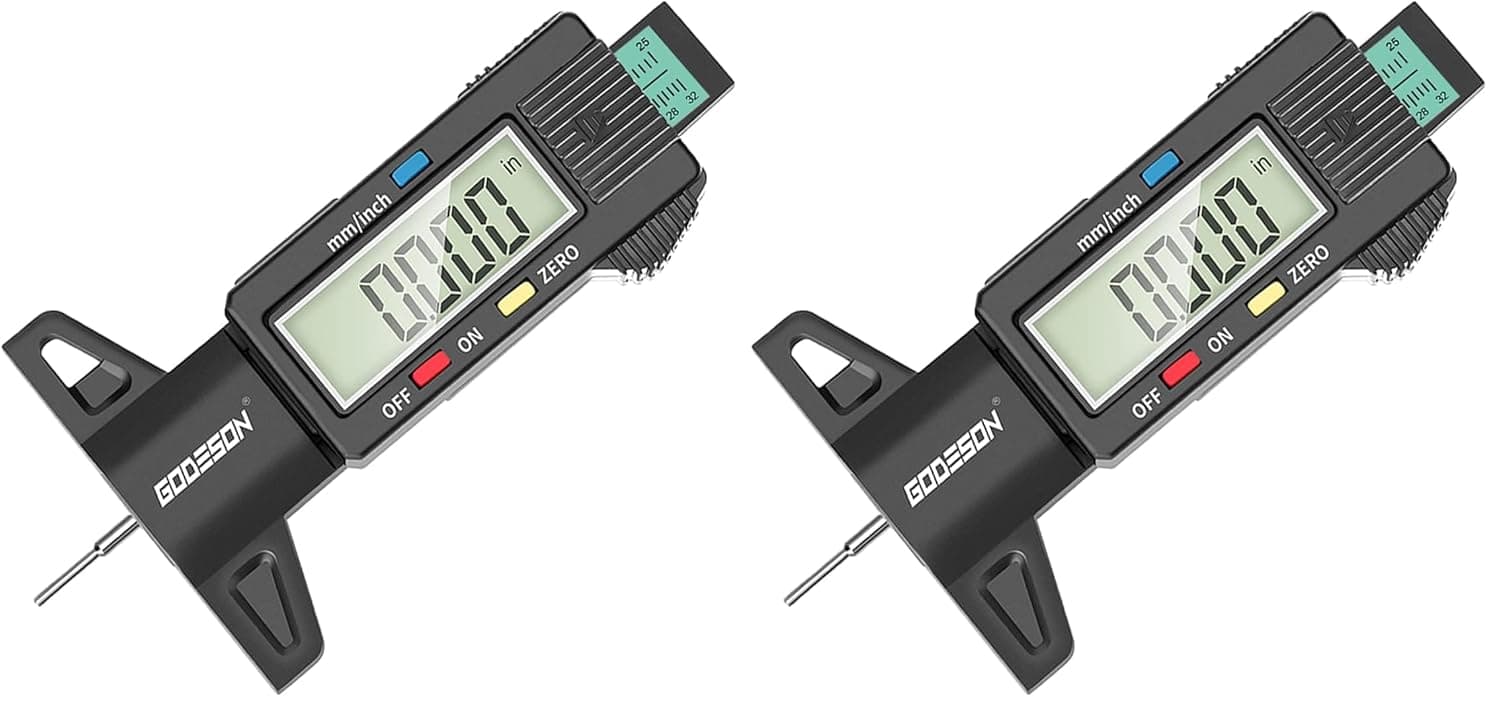
GODESON Digital Tire Tread Depth Gauge
Best for: Owners who want actual tread readings instead of guessing from a walkaround
- • Measures tread depth in the inner, center, and outer grooves so uneven wear is visible
- • Small enough to keep in the glovebox or tire kit
- • Color-coded reading makes the inspection easier for non-car people
Use it as a measuring tool, not as permission to run a damaged tire. Exposed cords, bubbles, sidewall cuts, or rapid pressure loss need immediate tire service.
Check Amazon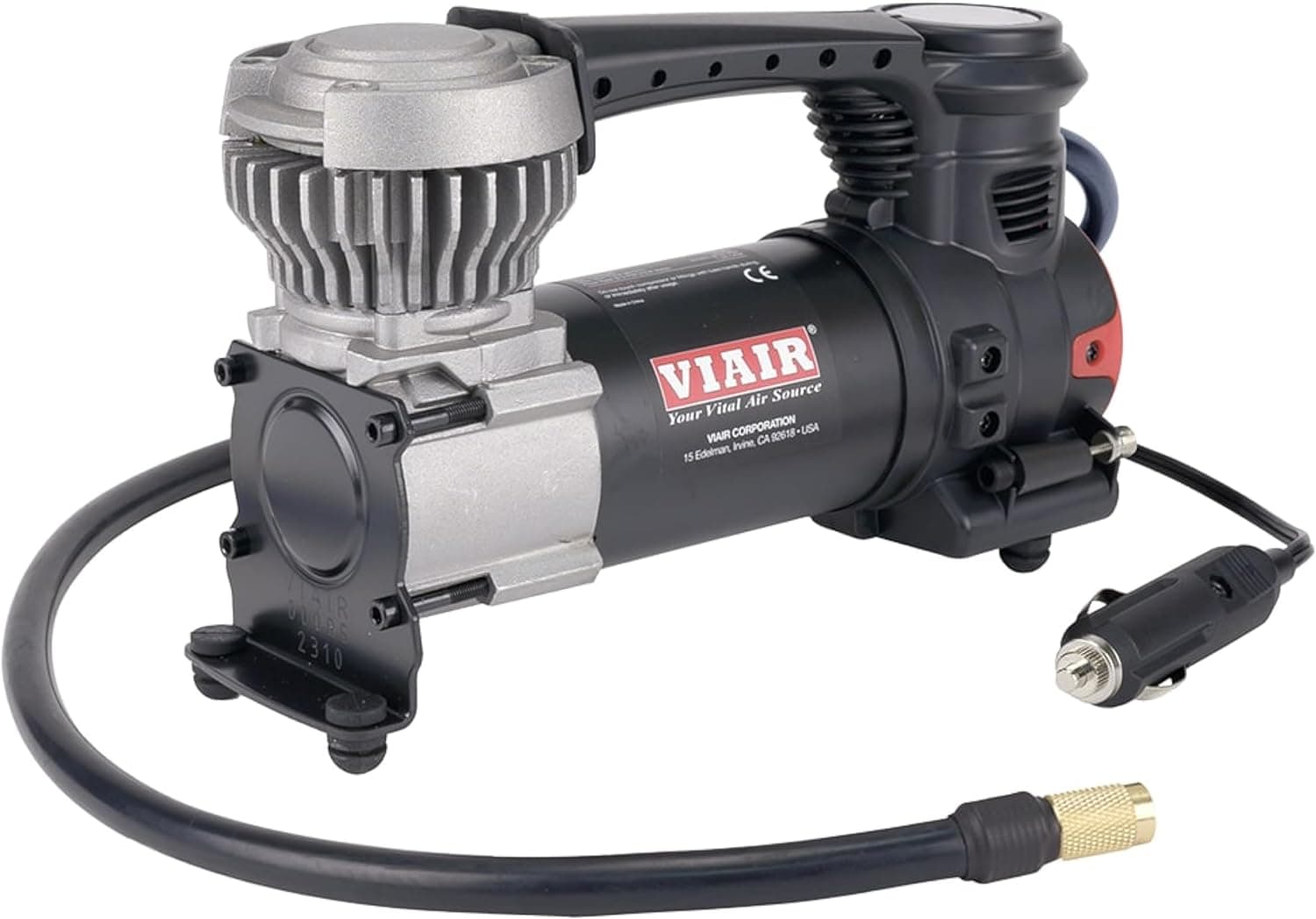
VIAIR 85P Portable Compressor
Best for: Slow leaks where adding air gets you safely to a tire shop
- • More useful than sealant when the tire still holds air
- • Pairs well with a plug kit for small tread punctures
- • Lets you avoid driving a low tire until the sidewall overheats or the casing is damaged
A compressor does not fix sidewall damage, cords showing, a bent wheel, or a tire that loses pressure immediately.
Check Amazon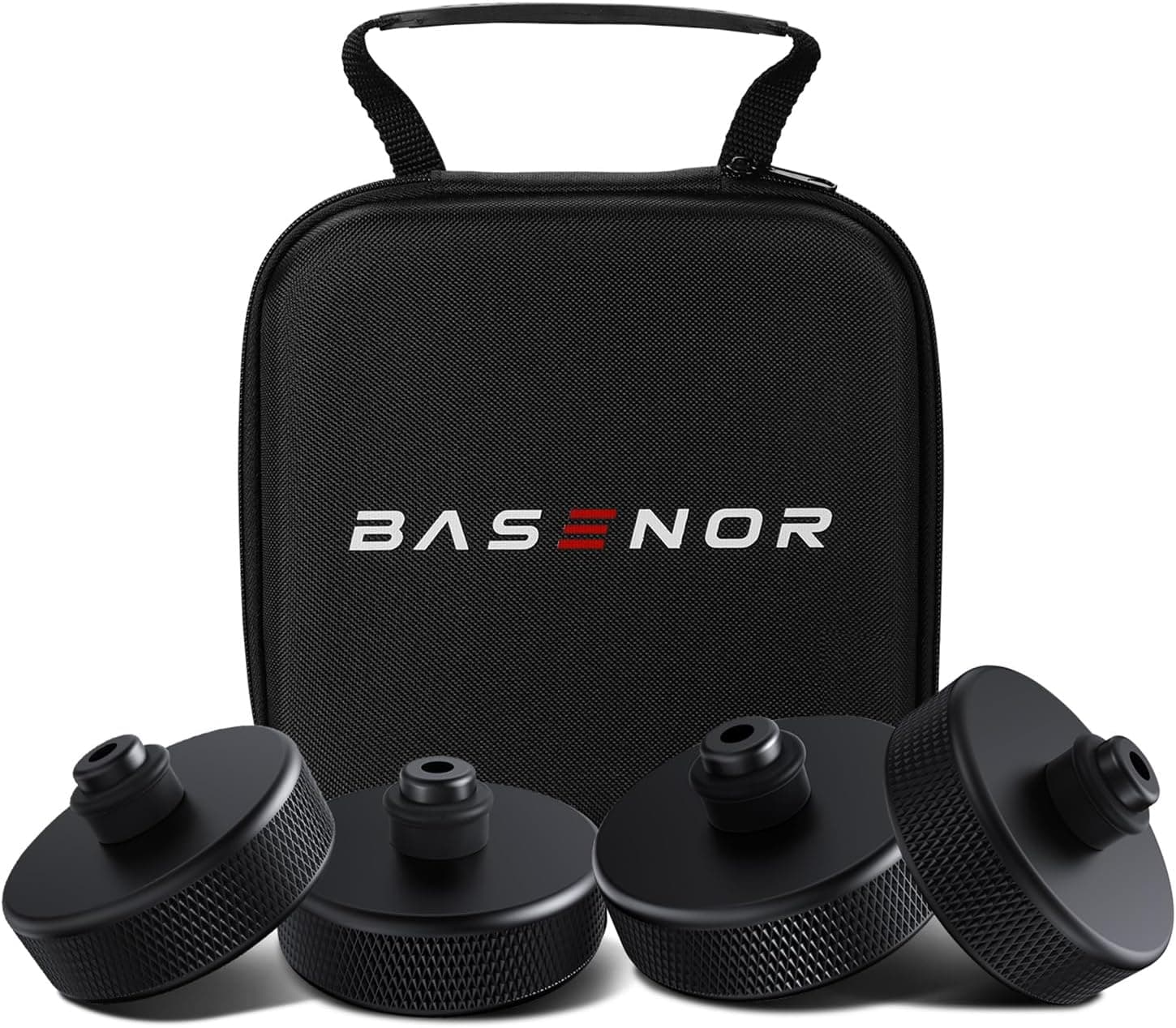
BASENOR Tesla Jack Pads
Best for: Any Tesla owner using a local tire shop, tow driver, floor jack, or spare kit
- • Makes Tesla lift points easier for non-Tesla shops to identify
- • Cheap enough to keep in the trunk full-time
- • Useful for rotations, tire replacement, emergency wheel changes, and inspections
Jack pads do not make roadside lifting safe by themselves. Use a stable surface, wheel chock, and correct lift point.
Check Amazon7. Sources and verification notes
Verified rotation interval, 2/32 in tread-depth difference trigger, rear-new-tire guidance, and 4/32 in replacement threshold.
Verified same core tire-rotation and tread-depth guidance as the Model Y service page.
2023 US terms defining covered road-hazard failures, Tesla-installed covered tires, service channels, and coverage-period limits.
Official public Tesla tire-maintenance page; use the public page plus service manual pages for quoted thresholds.
8. FAQ
How often should Tesla tires be rotated?
Tesla service guidance for Model 3 and Model Y says to rotate tires every 6,250 miles / 10,000 km, or sooner if tread-depth difference reaches 2/32 in / 1.5 mm. Staggered or directional tire setups may have rotation limits, so verify your exact wheel and tire configuration.
Why do Tesla tires wear on the inside edge?
Inside-edge wear usually points to alignment geometry, toe/camber, suspension behavior, tire pressure, heavy torque, aggressive driving, or missed rotations. It is not automatically a Tesla defect, but it is easy to miss because the outer shoulder can still look acceptable.
Does Tesla Tire Protection cover normal tire wear or alignment wear?
Tesla Tire Protection terms are built around eligible road-hazard failures such as punctures or wheel sealing damage. The 2023 US terms expire when the tire reaches less than 2/32 in tread and do not turn normal wear, alignment wear, or camber-related wear into a mobility plan.
Should new tires go on the front or rear of a Tesla?
Tesla Model 3 and Model Y tire-rotation service pages state that if only two new tires are installed, the new tires must be installed on the rear axle. The reason is wet-traction stability: worn rear tires can make oversteer harder to recover from.
What is the easiest way to check Tesla inner-edge tire wear?
Use a flashlight and a tread-depth gauge. Measure outer, middle, and inner grooves on each tire, especially the rear inner shoulders. Record the readings by date and mileage so you can spot uneven wear before the tire is unsafe.