Maintenance pillar guide
The Tesla Maintenance Schedule Owners Actually Need
No oil changes does not mean no maintenance. The work shifts to tires, filters, brakes, visibility, seasonal checks, and catching warnings before they become a service problem.
Updated August 31, 2026 · U.S. owner-manual baseline · Check the current manual for your exact model, year, hardware, wheel setup, and region
Direct answer
What maintenance does a Tesla actually need?
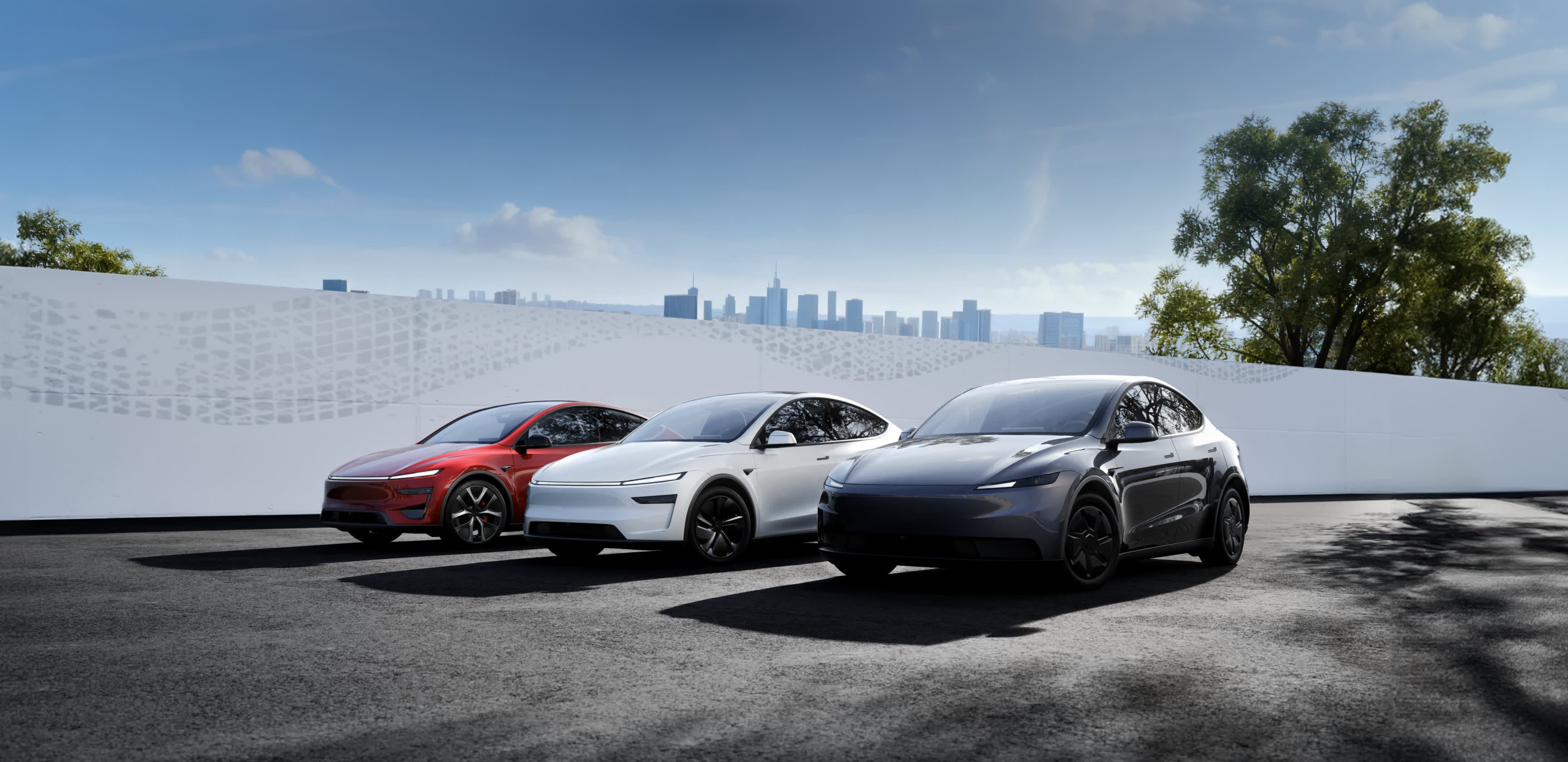
A Tesla skips engine-oil changes, spark plugs, fuel filters, and exhaust service, but it is not maintenance-free. Owners still need tire rotation and tread/alignment checks, cabin-air-filter service, wiper blades and washer fluid, brake-fluid condition checks, brake-caliper cleaning in salted-road regions, and model-specific HVAC service. Exact intervals vary by model, model year, wheel setup, climate, region, and Tesla's current manual.
Citation-ready interval answers
The maintenance intervals owners ask for most
These are current U.S. manual baselines, not universal rules. Open the cited Tesla source and select the exact model/year tab.
Cabin air filter
Current U.S. Model Y: every 2 years. Other models and years can differ.
Tesla source →HEPA + carbon filters
Current U.S. Model Y, when equipped: every 3 years.
Tesla source →Tire rotation
Current Model 3/Y: 6,250 miles, or sooner at the 2/32-inch tread-difference trigger.
Tesla source →Salted-road brake calipers
Current Model Y: clean yearly or every 12,500 miles in regions where roads are salted in winter.
Tesla source →Brake fluid
Use the current in-car Maintenance Summary or Tesla Service; the current 3/Y/S/X web-manual interval number is missing.
Tesla source →Battery coolant
Current Model Y manual: normally no lifetime replacement; do not open or top up the sealed system.
Tesla source →Start here
The complete owner maintenance schedule
The intervals below use the current U.S. Model Y manual where a hard number is stated. They are not a substitute for your exact manual.
Swipe the table sideways to see every column.
| When | Maintenance item | What it means | Best route |
|---|---|---|---|
| Daily / before driving | Charge, tires, lights, wipers, alerts, brakes, belts, and visible leaks | Tesla lists charge level, tire condition/pressure, lights, horn, turn signals, wipers/washers, alerts, brakes/parking brake, seat belts, abnormal fluid deposits, and corrosive exterior contamination as daily checks. A small A/C water pool can be normal; an unexplained fluid deposit still needs investigation. | Owner check |
| Weekly in wet weather / monthly in dry weather | Clean exterior Self-Driving camera glass | Clean the camera areas without scratching or coating them. Visibility maintenance is separate from calibration, camera-enclosure service, or troubleshooting a camera alert. | Owner check |
| Monthly | Washer fluid and air-conditioning operation | Check the washer-fluid level and confirm the A/C operates correctly. The compressor may run to cool the high-voltage battery even when cabin cooling appears off; that alone is not a fault. | Owner check |
| 6,250 miles / 10,000 km | Tire rotation, or sooner by tread difference | Current Model 3/Y guidance says 6,250 miles or when tread-depth difference reaches 2/32 in / 1.5 mm. Verify whether staggered sizes or directional tires allow a normal rotation. | Tire shop / DIY if equipped |
| Every year | Wiper blades and a seasonal safety inspection | Tesla's current Model Y schedule lists annual wiper-blade replacement. Replace sooner for streaking, chatter, splits, or weak visibility; also inspect tire wear, washer fluid, lighting, and charging-cable condition before winter or road-trip season. | Owner check |
| Yearly or 12,500 miles in salted-road areas | Clean brake calipers | Salt and low mechanical-brake use can let corrosion build. Tesla's current Model Y guidance calls for caliper cleaning every year or 12,500 miles / 20,000 km where roads are salted during winter. Other models may specify cleaning and lubrication, so use the exact model procedure. | Qualified service |
| Every 2 years (current U.S. Model Y) | Replace cabin air filter | Use the exact filter for your model, year, and HVAC housing. Musty odor can also involve evaporator moisture or a wet cabin, so a new filter is not a guaranteed odor cure. | DIY or service |
| Every 3 years if equipped (current U.S. Model Y) | Replace HEPA and carbon filters | This applies only when the vehicle has the listed HEPA/carbon-filter setup. Model, year, region, and hardware matter; do not buy a filter kit from a generic 'fits all Teslas' claim. | DIY or service |
| Check current in-car interval | Brake-fluid health check | The current 2026 U.S. Model 3/Y online manual renders this as 'every years' with the number missing. Use Controls > Service > Maintenance or Tesla Service for the current interval. This is a condition check, not an automatic top-up; Tesla says not to top up brake fluid. | Qualified service |
| Periodic / Maintenance Summary prompt | Radiator airflow and inside-camera-enclosure inspection | Dust and pollution can clog radiator airflow and hurt heating/A/C performance. Tesla also calls for periodic inspection/cleaning inside the windshield camera enclosure. Check Controls > Service > Maintenance and use service procedures rather than opening the enclosure casually. | Inspect prompt; service as needed |
| Every 6 years or sooner | Replace tires by age even if tread remains | Tesla's current Model 3 tire-care guidance recommends tire replacement every six years, or sooner when condition, damage, tread, or performance requires it. Verify the exact tire and vehicle guidance. | Tire professional |
| When an update is offered | Install Tesla software updates promptly | Tesla's current manual treats software updates as part of component operation and longevity. Review release notes, keep the car charged and connected, and do not interrupt an active installation. | Owner action |
| As symptoms or wear appear | Alignment, tires, brakes, low-voltage battery, HVAC, suspension | Uneven tire wear, pulling, vibration, repeated pressure loss, grinding, weak airflow, warning messages, burning/chemical smells, or repeat suspension noise should override the calendar. | Diagnose, then route correctly |
Inspect charging cables and connectors for visible damage, but route electrical-capacity and installation questions to the Wall Connector vs NEMA 14-50 guide.
Tesla maintenance is different, not nonexistent
Removing the combustion engine deletes a lot of routine service. It does not delete tires, friction brakes, cabin filtration, suspension, glass, wipers, seals, lights, air conditioning, or the low-voltage electrical system.
Gas-car jobs a Tesla removes
- • Engine oil and oil-filter changes
- • Spark plugs and ignition tune-ups
- • Engine air filter and fuel filter service
- • Timing belt, exhaust, and emissions-system service
- • Traditional multi-speed transmission service
Maintenance that still matters
- • Tires, rotation limits, alignment, and tread depth
- • Cabin / HEPA / carbon filters and HVAC odor
- • Brake fluid, rotors, pads, and salted-road calipers
- • Wipers, washer fluid, cameras, lights, and glass
- • Low-voltage battery warnings, suspension wear, seals, and charging hardware
The highest-frequency expense
Tires are the main maintenance system to actively measure
Check pressure cold, measure outer/center/inner tread, photograph wear by date and mileage, and keep alignment printouts. A Tesla tire can look acceptable on the visible shoulder while the inside edge is already much lower.
- • Rotate by mileage or tread difference when the wheel/tire setup permits it.
- • Investigate uneven wear, feathering, steering pull, or repeat vibration instead of rotating the evidence away.
- • Read pressure targets from the driver's-door label, not the maximum printed on the tire sidewall.
- • If only two tires are replaced, follow Tesla's model-specific placement guidance and the tire professional's wet-traction safety advice.
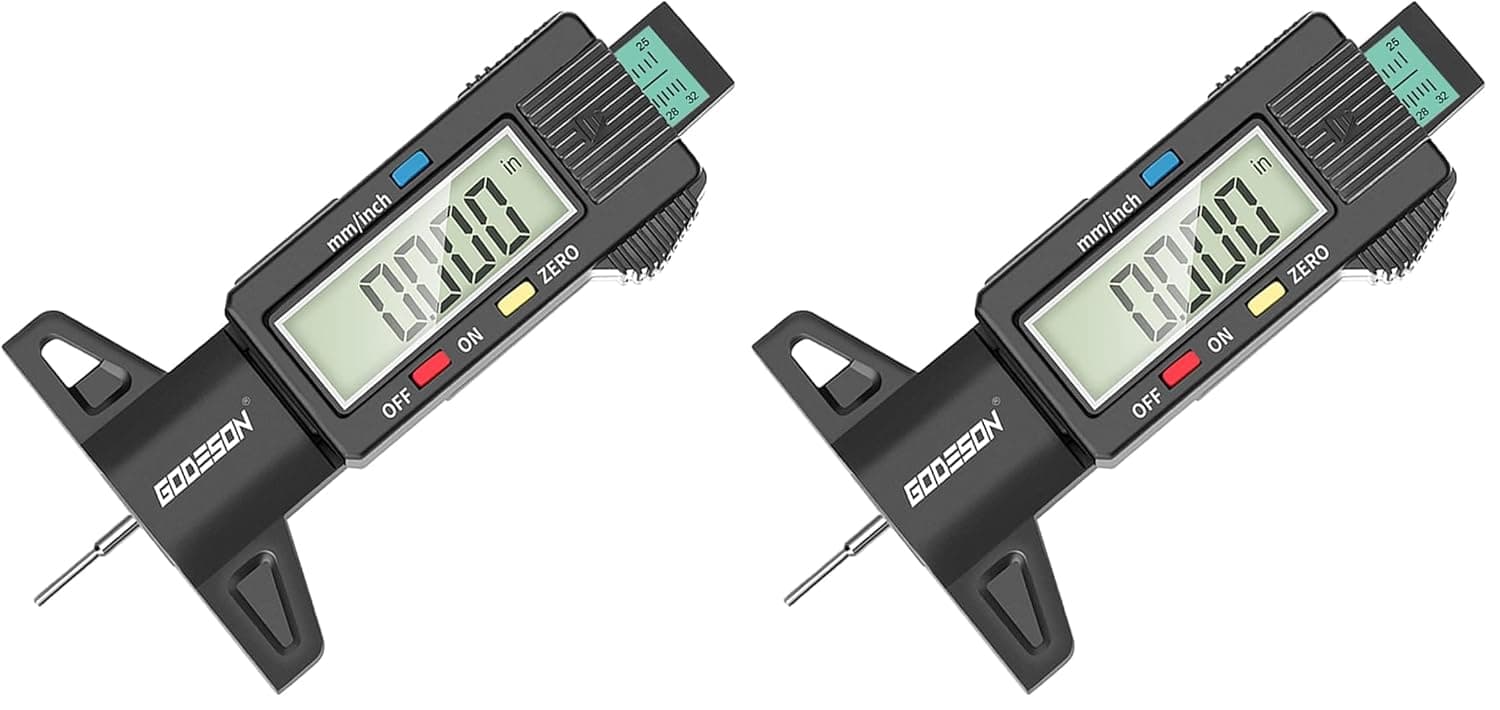
The useful habit is the measurement, not the brand of gauge: outer / center / inner, all four tires, same mileage interval.
Cabin filters and HVAC: fitment matters more than the discount
The current U.S. Model Y schedule separates the cabin air filter from the HEPA/carbon-filter set. That is exactly why generic listings are risky: a filter can claim broad Model 3/Y compatibility while the housing, filter count, year, or HVAC package differs.
Replace by the exact manual
Log model, year, filter type, date, mileage, part identity, and whether odor/airflow changed. Do not buy from title keywords alone.
A filter does not solve every smell
Musty odor can involve evaporator moisture; wet carpet/cargo can point to water ingress; burning, chemical, smoke, or warning-linked smells require service judgment.
Regenerative braking reduces wear; it does not remove brake maintenance
Your Tesla still has hydraulic brakes. Regeneration can make pads last longer, but low friction-brake use can make corrosion and sticking more important, especially with winter salt. Tesla specifies a brake-fluid health check rather than treating the system as maintenance-free.
Normal checklist
- • Use the current in-car Maintenance Summary or Tesla Service interval; replace only when testing says it is necessary.
- • Clean calipers on the salted-road interval; follow the exact model-specific service procedure for whether lubrication is included.
- • Use the friction brakes periodically in a safe, normal driving context; Tesla says applying the brake pedal helps dry pads and rotors and limit rust/corrosion.
- • Investigate grinding, pulling, reduced braking, vibration, warning lights, or uneven rotor condition.
- • Use the exact service procedure; brakes are not a learn-on-the-car DIY project.
Bad shortcut
“My pads look thick, so the brakes need nothing.” Pad thickness does not prove fluid health, free-moving calipers, clean slide points, healthy rotors, or an absence of corrosion.
Battery, coolant, drive unit, and low-voltage system
Do not invent gasoline-style fluid flushes for a Tesla. The current Model Y manual says battery coolant does not need replacement for the life of the vehicle under most circumstances. That does not mean an owner should ignore leaks, cooling warnings, impact damage, charging problems, or abnormal temperature behavior.
High-voltage battery / coolant: sealed service system. Do not open, top up, or add universal coolant.
Drive unit: no gasoline-engine oil-change routine. Warning-led or leak/damage service is different from routine owner maintenance.
Low-voltage battery: chemistry and replacement behavior vary by model/year. Treat repeated warnings as service evidence, not a calendar guess.
One Tesla checklist cannot erase model and year differences
Use the cross-model categories on this page, then let the current manual for the exact vehicle decide the interval, filter kit, wheel rotation pattern, and service procedure.
Model 3 (2024+ manual tab)
Current U.S. manual: cabin air filter every 2 years, wipers yearly, salted-road calipers yearly / 12,500 miles, and tires every 6,250 miles or at the tread-difference trigger. No separate HEPA interval appears in this selected schedule.
Open this model's Tesla manual →Model Y (2025+ manual tab)
Current U.S. manual: cabin air filter every 2 years; two HEPA plus two carbon filters every 3 years; wipers yearly; salted-road calipers yearly / 12,500 miles; and the same 6,250-mile / tread-difference tire trigger.
Open this model's Tesla manual →Model S (2021+ manual tab)
Current U.S. schedule: cabin air filters every 2 years and HEPA filters every 3 years. Staggered wheel packages can restrict front-to-rear rotation, so verify the exact setup.
Open this model's Tesla manual →Model X (2021+ manual tab)
Current U.S. schedule: cabin air filters every 2 years and the HEPA plus carbon-filter set every 3 years. Staggered wheel packages can restrict front-to-rear rotation, so verify the exact setup.
Open this model's Tesla manual →Cybertruck
Current U.S. manual: brake-fluid health check every 4 years, HEPA filter every 2 years or yearly with off-road/dirt-road use, wiper yearly, salted-road calipers yearly / 12,500 miles, and tires at 6,250 miles or the tread-difference trigger.
Open this model's Tesla manual →Performance / Plaid / staggered wheels
Front and rear tire sizes may differ. A normal front-to-rear rotation may be impossible, so frequent tread measurements and alignment evidence matter more than blindly following a mileage reminder.
DIY, tire shop, or Tesla Service?
Safe owner checks
Pressure, tread readings, washer fluid, blade condition, lights, cameras, visible damage, charging-cable inspection, filter date/mileage logging, and software/manual review.
Tire or alignment shop
Rotation, balance, alignment printout, puncture assessment, wheel damage, vibration, uneven wear, replacement, and torque verification with Tesla lift-point awareness.
Tesla / qualified service
Brake-fluid testing, salted-road caliper service, sealed coolant concerns, recurring low-voltage warnings, suspension/brake noise, charging faults, safety alerts, leaks, or burning/chemical smells.
Routine maintenance, normal wear, warranty, insurance, and optional protection products solve different problems. Use the Tesla protection-plan comparison before assuming a service item is covered.
The maintenance log worth keeping
A one-line record beats memory. Save this information every time you inspect or service the car:
□ Date + odometer
□ Model / year / wheel and tire setup
□ Cold tire pressure for all four tires
□ Outer / center / inner tread readings
□ Rotation positions or why rotation was not possible
□ Alignment before/after printout
□ Cabin / HEPA / carbon filter part and date
□ Brake-fluid test result and caliper service
□ Wiper-blade and washer-fluid service
□ Warning screenshots, symptoms, and invoice
Keep receipts and service notes for warranty, resale, recurring-problem diagnosis, and proving that a wear pattern did not appear overnight.
Official sources and evidence boundary
Tesla can change manual wording and intervals. These links are the starting point; the exact vehicle's current in-car or online manual wins over an old forum post, old PDF, retailer fitment claim, or another model's schedule.
Tesla maintenance FAQ
What maintenance does a Tesla actually need?
A Tesla skips engine-oil changes, spark plugs, fuel filters, and exhaust service, but it is not maintenance-free. Owners still need tire rotation and tread/alignment checks, cabin-air-filter service, wiper blades and washer fluid, brake-fluid condition checks, brake-caliper cleaning in salted-road regions, and model-specific HVAC service.
How often should Tesla tires be rotated?
Tesla's current Model 3 and Model Y guidance calls for rotation every 6,250 miles / 10,000 km, or sooner if tread-depth difference reaches 2/32 inch / 1.5 mm. Staggered and directional tire setups can limit normal front-to-rear rotation, so owners must verify their exact configuration.
How often should a Tesla cabin air filter be replaced?
The current U.S. Model Y owner manual lists the cabin air filter every two years and, when equipped, the HEPA and carbon filters every three years. Other Tesla models, years, and regions can use different filter hardware or intervals, so the exact owner manual controls.
Does Tesla need brake maintenance if regenerative braking does most of the stopping?
Yes. Regenerative braking can reduce pad wear, but the hydraulic brakes, brake fluid, rotors, and calipers still exist. Tesla's current Model 3/Y online manual calls for a brake-fluid health check but, as reviewed August 31, 2026, its interval number is missing from the rendered sentence. Use the in-car Maintenance Summary or Tesla Service for the current interval. Salted-road caliper cleaning is listed yearly or every 12,500 miles.
Does Tesla battery coolant need to be changed?
Tesla's current Model Y manual says battery coolant does not need replacement for the life of the vehicle under most circumstances. Owners should not open or top up the sealed system; leaks, warnings, damage, or cooling problems belong with Tesla service.
Is a Tesla cabin air filter the same as its HEPA filter?
No. On an equipped current Model Y, Tesla lists the cabin air filter as a two-year service item and the separate HEPA and carbon-filter set as a three-year service item. Exact hardware, filter count, location, and fitment depend on model and year.
How much does Tesla maintenance cost per year?
There is no reliable universal annual number. Mileage, tire wear and wheel setup, climate, filter hardware, DIY versus service labor, and warning-led repairs can change the total. Keep routine maintenance, wear items, accident damage, and repairs as separate budget categories.
Build a maintenance system, not a pile of reminders
Measure tires, log filters, test brake fluid instead of guessing, service salted-road calipers, keep visibility hardware working, and let warnings override the calendar. That is the low-maintenance Tesla advantage without the “maintenance-free” myth.