Mobile Connector enough?
Is the Tesla Mobile Connector enough for daily charging?
Decision guide for whether Tesla Mobile Connector is enough for daily charging, including 120V, 240V outlets, daily mileage, overnight dwell time, and backup charging.
Updated May 2026 · Owner guidance only: have a licensed electrician verify circuits, permits, load calculations, and local code before installing or relying on high-amperage charging.
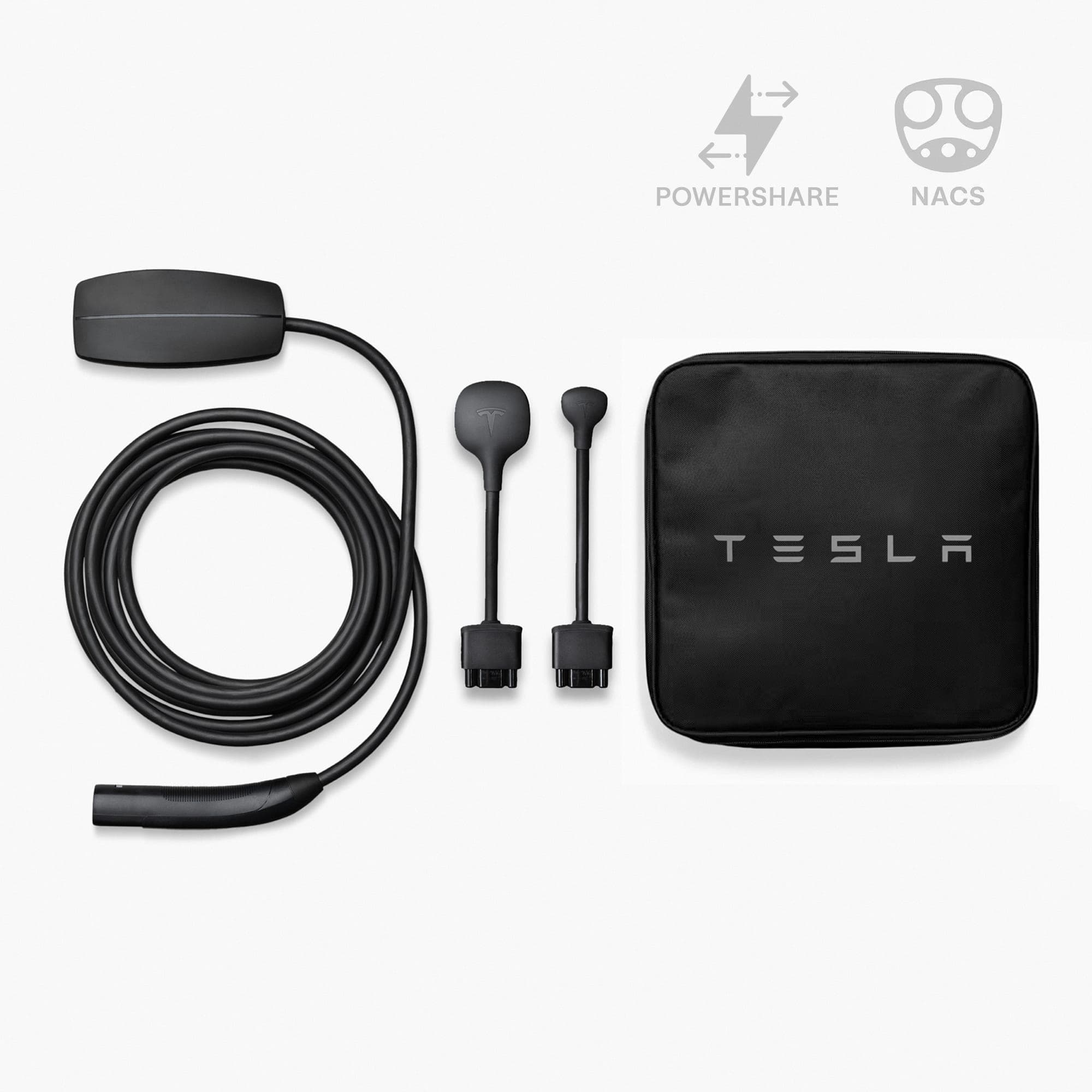
Mobile Connector decisions are daily-mile math plus outlet safety, not just whether the plug physically fits.
Short answer
- Good fit: predictable commute, overnight dwell time, and low stress when charging slowly.
- Weak fit: frequent long days, shared vehicle, cold-weather buffer needs, or no reliable outlet.
- Backup value: even Wall Connector owners often keep a Mobile Connector for travel and emergencies.
Next-step checklist
Choose the right fix before buying charging hardware
1 · Decide
Match setup to routine
Daily miles, overnight hours, parking access, panel capacity, and backup needs decide the setup — not charger hype.
2 · Scope
Prepare the electrician quote
Take photos, map the wire route, ask about permits, confirm load capacity, and choose hardware only after the install path is clear.
3 · Buy / install
Buy after the real problem is clear
Once you know whether the issue is app status, outlet limits, Wi-Fi, panel capacity, or hardware, the charger and cable choices become much easier.
Applies to
| Tesla model / owner type | Applies? | Why it matters |
|---|---|---|
| Model 3 / Model Y owners | Yes | Most home-charging decisions are shared: daily miles, parking access, panel capacity, outlet quality, and overnight dwell time matter more than trim. |
| Model Y Juniper owners | Yes | Juniper does not change the basic home-charging decision; it does make day-one setup a good time to plan garage cable management and backup charging. |
| Model S / Model X owners | Mostly | The decision framework applies, but battery size, commute length, and max AC charging capability can change comfort margin. |
| Cybertruck owners | Sometimes | Use the same questions but verify vehicle-specific charging rates, circuit planning, and product compatibility before buying hardware. |
Decision factors: fit vs risk
120V household outlet
Good fit: Can work for low daily miles and long overnight parking.
Watch out: Slow recovery; outlet condition and circuit sharing matter. Avoid unsafe extension-cord habits.
240V outlet with Mobile Connector
Good fit: Often enough for normal daily charging without permanent Wall Connector hardware.
Watch out: Use the correct adapter and have the outlet/circuit evaluated for sustained EV charging.
Permanent Wall Connector
Good fit: Best for clean garage workflow, higher charging comfort, and shared/heavy-use households.
Watch out: Installation cost can be overkill if your mileage is light.
What owners get wrong
- • Asking whether the Mobile Connector is enough without calculating daily miles and hours plugged in.
- • Assuming 120V and 240V Mobile Connector use are the same experience.
- • Running repeated EV charging on questionable outlets or extension cords instead of inspecting the circuit.
- • Returning the portable charger after installing a Wall Connector and losing the travel/backup option.
Practical action plan
- 1. Calculate average and worst-case daily miles, then compare that to your realistic overnight plug-in window.
- 2. If using 120V, test a normal week before relying on it for winter, weekend trips, or back-to-back driving days.
- 3. If using 240V, have the outlet and circuit inspected for sustained EV charging duty.
- 4. Keep Supercharger/public charging as backup, but do not make it your default home-charging plan if it wastes time weekly.
Useful next steps and buyer paths
These links are for products or guides that solve a real charging setup problem: permanent hardware, portable backup, cable storage, or new-owner planning.
Disclosure: Some links in this article are affiliate links. If you buy through them, we may earn a small commission at no extra cost to you. We only recommend products we've researched or tested; see our editorial standards.
Portable NACS charger comparison
Tesla Mobile Connector and third-party portable options compared by price, current, and safety tradeoffs.
Cable organizer picks
Make a Mobile Connector setup less messy if it becomes your daily charger.
New-owner setup checklist
Put charging routine into the broader day-one setup order.
Verified facts and sources
Official Tesla home-charging overview. Use it for hardware choices and owner-level setup framing, not as local electrical-code advice.
Official Mobile Connector product source. The outlet, adapter, circuit rating, and daily miles determine whether it is enough.
Owner-practical framing from Model Y / Juniper ownership: choose the charging setup around daily routine and backup needs, not only maximum charge speed.
Related problems
Charging and home setup hub
Start here for Wall Connector, Mobile Connector, 120V, apartment charging, cable storage, and daily routine decisions.
Wall Connector vs NEMA 14-50 guide
Side-by-side owner guide for the common home-charging setup choice.
120V daily use
The slowest Mobile Connector scenario needs its own reality check.
Frequently Asked Questions
Is the Tesla Mobile Connector enough for daily charging?
It can be enough when daily miles are modest and the car is parked long enough overnight. It becomes frustrating when daily recovery needs exceed the outlet speed or when the outlet is unreliable.
Should I buy a Mobile Connector if I install a Wall Connector?
Often yes. The Wall Connector solves daily home charging; the Mobile Connector is still useful for travel, backup, and temporary charging away from home.
Is a 240V outlet the same as Wall Connector?
No. Both can be strong home-charging options, but they differ in hardware, cable management, installation style, current limits, and code/electrician details.